
Several years ago, I tried my hand at the Liturgy of the Hours for Lent. It was mostly successful. I bought the book; I learned how to use it. Again, I’ll stress: mostly. This isn’t a book one can just pick up and read cover to cover. The book itself comes with a guide. But I tried, and even if I didn’t follow it exactly as I was meant to, it did mean I was praying twice a day. That was a whole lot more than I’d done previously.
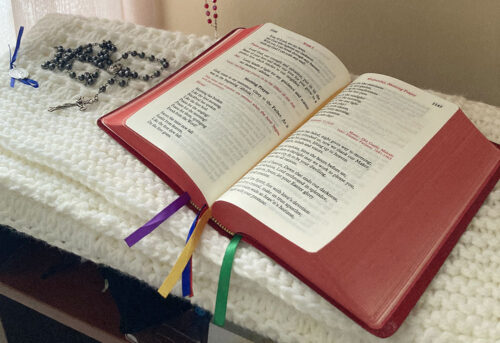
This year, I tried again. I already had the book, and mostly knew how to use it, and also learned it can be used in junction with the Divine Office app. This has made the whole experience so much nicer. It becomes actual, proper prayer when being guided through it, rather than trying to learn it. And with some experience with Liturgy of the Hours already, I was able to delve right into prayer time rather than struggling with what page we should be on, or where the ribbon markers should go (plus, the app tells you the page number!).
I’ve been tightly wound the past few months. Some may even say the past few years. I jump from task to task, trying to complete them as quickly as possible. It’s resulted in not really paying attention to what I’m doing, but merely getting things done. But when I sat down on Ash Wednesday, prepared with my prayer book and accompanying app, and heard the first notes of a hymn… that all melted away, even if for only fifteen minutes. Because this wasn’t another thing on the to-do list. This wasn’t something to just finish so I could move on to the next thing. This was real and proper prayer. There was an overwhelming sense of calm.
I won’t say it’s like that every time. I’ve been doing the morning and evening prayers, and there are some days I’m completely distracted. I’ll hear the closing prayer and don’t remember what happened ten minutes ago. But prayer is like that sometimes, isn’t it? Sometimes you’re all in, and connect with every word uttered. And sometimes you’re not, preoccupied with your next several tasks. Or thinking about an email you forgot to send that day. Or focusing on your growling stomach, because you still have to make breakfast.
But that doesn’t matter right now.
I’m certainly not good at that. But that’s exactly why I need this scheduled prayer time. It’s so easy to get wrapped up in life. It’s easy to get distracted (especially when you’re using your phone to pray—it’s right there, and it’s pinging you!). But we spend so much time, sometimes hours at a time, on other things. If I can spend an hour preparing dinner, I can spend fifteen minutes at night with God. And maybe not get distracted, too. Sometimes.
A new edition of Liturgy of the Hours is in the works. We know I can’t resist a beautiful set of new books. (Naturally, I’ve joined the waitlist.) Currently, I only have one of the old four-book set, the one specifically for Lent. I used to think you had to pray each and every hour if you were going to do it right. But that’s not necessary at all for laypeople—and often not possible! If you do anything, make the morning prayers. It’s a beautiful way to start a day. Take the time at night to do evening prayers. For me, it’s often much needed after a long day of work. Some sessions are hard. My brain is all over the place. But light a candle, sit in a dimly-lit room, and start somewhere.